OpenAI Launches a Science Blog, Sharing How AI Is Used and How Results Are Checked
Scientists and researchers will share what they found with AI and how they got there. The blog will cover everything from data analysis to experiment design, along with how results were checked and where the limits lie.
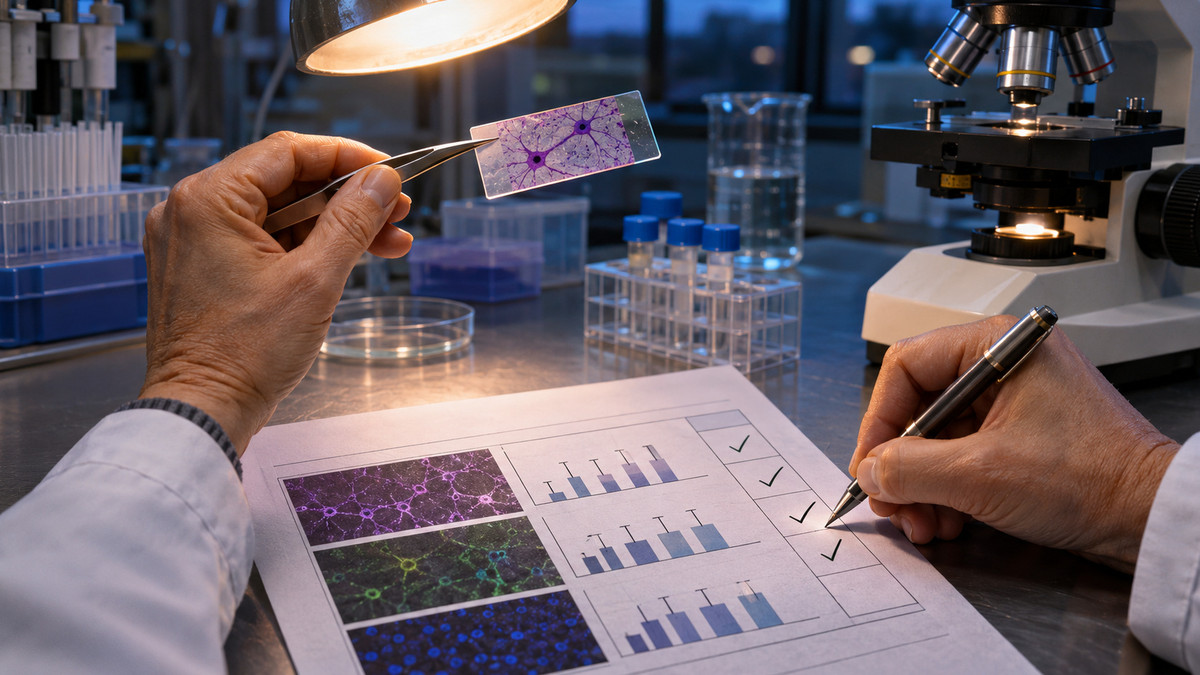
OpenAI announced on November 15 (local time) that it is launching a science blog devoted to research done with AI. The idea is to give scientists and researchers a place to share both what they discovered and how they arrived at it.
The blog will feature research results and work in progress across different fields. It will also cover how AI is used for computation, data analysis, literature search, and experiment design. The format puts results and methods side by side, showing how researchers actually applied AI to their own work.
Data From Millions of Mouse Brain Cells, Analyzed in 32 Minutes
One of the cases OpenAI highlighted is biological data analysis. The company said thousands of autonomous AI agents powered by GPT-Rosalind analyzed existing experimental data from millions of mouse brain cells in 32 minutes.
Another featured project used ChatGPT and Codex to search for antibiotic candidates. It is a concrete example of the specific jobs AI takes on in scientific research.
The blog will also cover results in mathematics, computer science, and physics. OpenAI pointed to a proof related to the Navier-Stokes problem produced by one of its internal systems. At the same time, it named the question of how to review AI-generated proofs as an open challenge.
So Can the Results Be Trusted?
Along with sharing methods, OpenAI said it will address verification approaches and limitations. In other words, the plan is to explain not just what results AI produced, but how those results were checked. The company named reviewing AI-generated proofs and deciding which experiments to run first as key questions.
The primary audience is scientists and researchers. Anyone looking to try AI in their own research setting can consult task-specific guidance on things like computation or literature search. General readers also get a look at how ChatGPT and Codex are being used to hunt for antibiotic candidates.
What to watch from here is how concretely each case spells out its verification steps and limitations. To judge what an analysis finished in 32 minutes or a newly generated proof means for research, readers need to see how the results were checked.